Open 24/7
December 19, 2025
Trees are living parts of your property. They provide shade, beauty, privacy, and value. Yet even the strongest trees reach a point where they become unsafe. The challenge for most homeowners is knowing when that moment has come. Waiting too long to remove a tree can lead to broken branches, property damage, or even injuries. On the other hand, removing a tree too early can be unnecessary and costly.
This guide breaks down how to tell when a tree should be removed, what signs to look for, and when to call an expert like Garrison McKinney Tree Service in Tupelo, Mississippi. Every point here is based on real inspection patterns, not guesswork.
Trees don’t just die overnight. They decline slowly, showing signs long before they become dangerous. Recognizing those clues early can prevent accidents and save you thousands in potential damage. Tupelo’s warm and humid climate makes trees more prone to fungal infections, pest infestations, and storm damage. These local factors accelerate decay and make regular inspections even more essential.
A single fallen limb can destroy a roof or block a driveway. A fallen tree can take down power lines. Removing a tree at the right time protects both your property and the rest of your landscape.
The most obvious reason to remove a tree is when it’s no longer alive. A dead tree becomes dry and brittle, unable to withstand pressure or wind. Even if it’s still standing, it poses a major risk.
If more than 50 percent of the tree shows these symptoms, it’s beyond saving. The internal decay may already have spread through the trunk, leaving the tree hollow inside. At this stage, removal is not optional; it’s necessary.
A slow, natural lean can develop as a tree grows toward sunlight. That’s normal. What isn’t normal is a sudden tilt that appears after heavy rain, wind, or soil changes. This kind of movement usually means root damage or structural imbalance.
When roots are damaged, the tree loses its anchor. Even a mild storm can bring it down. If a lean has changed direction or angle quickly, do not wait. Contact a professional immediately.
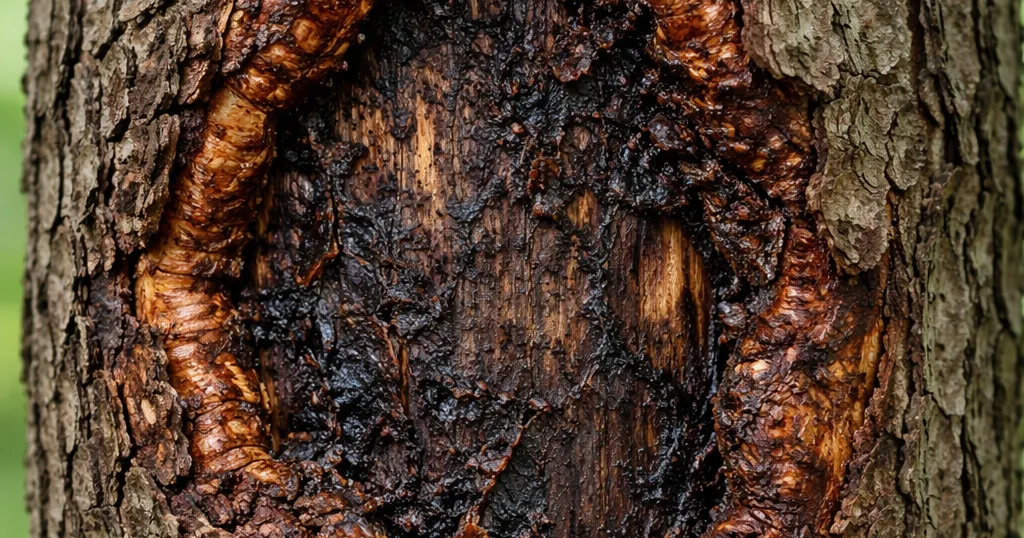
A strong trunk supports the tree’s entire weight. Once it develops large cavities or cracks, stability is compromised. Small hollows can occur naturally, but when they become deep or widespread, the interior is likely to rot.
A tree can survive with minor surface damage, but if more than one-quarter of the trunk is decayed, it’s unsafe. Internal rot rarely reverses, even if the exterior looks solid.
If branches are breaking off without wind, it’s a sign of disease or internal weakness. Dead limbs also unbalance the canopy, increasing stress on the trunk.
If pruning doesn’t improve the tree’s condition, removal might be necessary. A healthy tree shouldn’t shed heavy limbs regularly.
Even healthy trees can cause damage if planted too close to buildings, fences, or electrical lines. Roots may lift sidewalks or infiltrate pipes, while branches can scrape roofs or block gutters.
If your tree has outgrown its space, pruning might help temporarily. But once roots or branches start threatening structures, removal is often the safer long-term solution.
Diseased trees can look fine from afar, but decay from the inside out. Some infections spread to nearby plants if not controlled.
In Tupelo, oak wilt, pine beetles, and root rot are frequent issues. When infection reaches the roots or trunk, no treatment can restore the tree. Early removal protects your yard from further damage.
| Problem | Visible Sign | Cause | Recommended Action |
|---|---|---|---|
| Dead branches | Bare limbs | Disease or age | Remove if widespread |
| Sudden lean | Soil lifting | Root failure | Immediate inspection |
| Fungal growth | Mushrooms at the base | Internal rot | Remove safely |
| Bark loss | Exposed wood | Decay | Evaluate trunk; remove if hollow |
| Insect holes | Tunnels in bark | Beetles or borers | Treat early; remove if extensive |
Root systems are a tree’s foundation. Construction work, compacted soil, or poor drainage can seriously weaken them. Once the roots are damaged, the whole tree becomes unstable.
Signs of Root Trouble
Unfortunately, roots don’t heal once they rot or are cut deeply. Even if the canopy still looks healthy, a tree with root damage is at high risk of falling.
Many property owners wait for visible death before removing a tree. That’s a mistake. Trees can appear healthy while being structurally unsound inside. Another common misconception is that trimming will solve everything. Trimming helps manage canopy weight but doesn’t fix root or trunk decay. Once the internal structure is compromised, removal is the only responsible step.
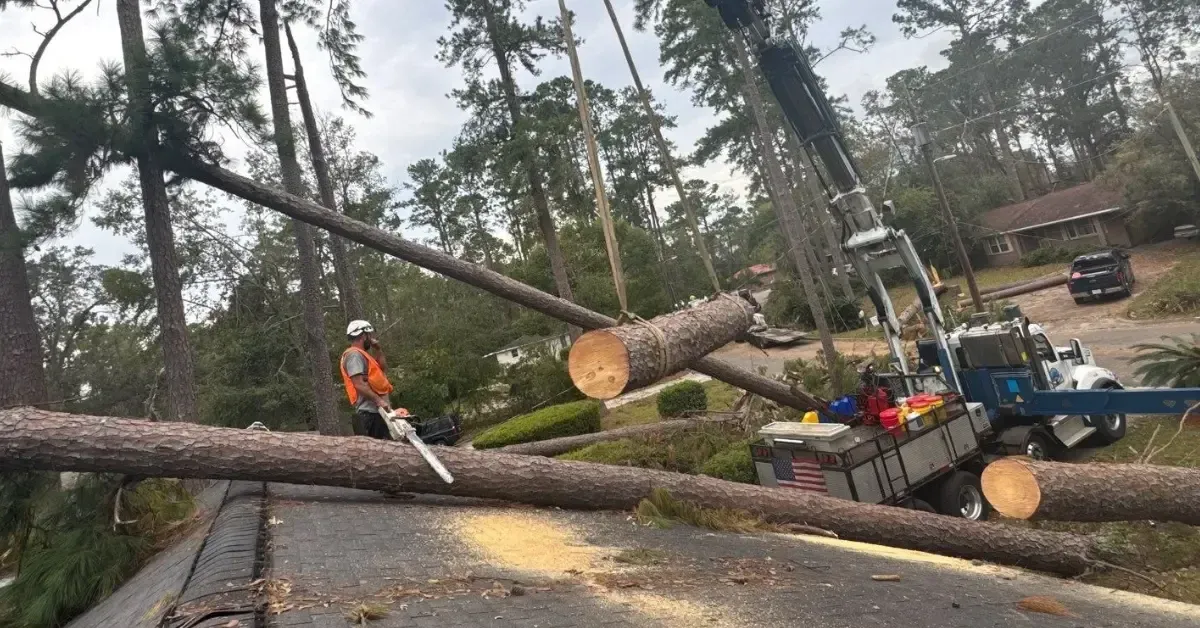
Mississippi storms often create emergency tree situations. Lightning strikes and high winds can cause unseen fractures in the trunk or branches.
After a storm, check for:
If the tree is leaning, losing bark, or showing cracks, contact professionals right away. Delaying removal can increase danger to nearby structures.
Overgrown trees can block sunlight, reducing the health of lawns or gardens underneath. Competing roots can also starve smaller trees of nutrients. If one tree dominates too much space, the removal of that tree may help restore landscape balance.
Expert Tip: Start by removing the weakest or most diseased trees first. This improves the overall health of your property.
Safety should always come before sentiment. Trees near driveways, sidewalks, or playgrounds can become liabilities if unstable.
Most home insurance policies hold property owners accountable for known hazards. Document tree inspections and removal quotes to demonstrate due diligence if claims arise
Even if the exterior looks solid, the interior might be compromised. A hollow trunk cannot support weight during high winds.
Simple Test:
Tap the trunk gently with a rubber mallet. A hollow sound suggests internal rot. If one-third or more of the trunk’s diameter is hollow, removal is the safest choice.
Fungi are a clear sign of internal decay. When you see mushrooms, conks, or sponge-like spots at the base, decay has already set in. These trees can collapse without warning. Removal prevents injury and stops rot from spreading to nearby trees.
Tree removal is dangerous work. Professional crews use specialized equipment and follow strict safety procedures. Here’s the right way to begin.
Expert Tip: Ask whether the company provides debris removal and stump grinding. It saves you time and money later.
A tree is often beyond saving if more than half its branches are dead, the trunk is hollow or cracked, or the roots are severely damaged. Other warning signs include fungus growth at the base, peeling bark, or large dead sections in the canopy. Once the structural integrity is compromised, treatment usually won’t help. It’s best to have a licensed and insured arborist inspect it before it becomes a hazard.
A tree with a gradual lean might still be stable if the roots are intact. Professionals can sometimes correct it using cabling or staking. However, if the lean develops suddenly after a storm or if you see lifted soil or exposed roots, it’s likely unsafe. Sudden leaning often means root failure, and removal is usually the only reliable option to prevent collapse.
Tree removal costs depend on the tree’s size, condition, and accessibility. Smaller trees may cost around $300, while large or hazardous ones can reach $1,000 or more. Large trees near structures or power lines can exceed $2,000–$3,000, especially after storms or in emergencies. Always request an on-site quote, since every tree and location is different.
It’s never worth the risk. Tree removal requires chainsaws, ropes, rigging, and experience to manage unpredictable falls. DIY attempts can cause severe injury, property damage, or worse. Experienced tree care professionals are trained to handle removals safely and efficiently, especially in tight spaces or near homes.
A dead tree won’t stay standing forever. Over time, it dries out, weakens, and becomes a serious safety threat. Falling branches or full collapse can destroy roofs, cars, or power lines. Most insurance companies won’t cover damages caused by neglect, making prompt removal the smartest choice.
Winter is generally the best time for tree removal. Trees are dormant, meaning less sap flow and reduced stress on surrounding vegetation. Cooler, firmer ground in winter also helps reduce lawn damage from heavy equipment. While removals can be done year-round, winter conditions usually make the job cleaner and more efficient.
Inspect your trees at least once a year and after severe weather. Look for cracks, dead branches, fungus at the base, or leaning trunks. Regular checkups help identify disease or decay before it becomes dangerous. Early action can save healthy trees and prevent expensive emergencies later.
Tree removal isn’t just about appearance; it’s about protecting your property and family. Knowing the warning signs of decay or instability can help you act before disaster strikes. Garrison McKinney Tree Service provides Tupelo homeowners with expert evaluations, safe removals, and complete cleanup. Whether it’s a storm-damaged pine or a dying oak, our team ensures your yard stays safe, clean, and ready for new growth.
At Garrison McKinney Tree Service, we take pride in providing exceptional tree care to our customers. We would be grateful if you could share your thoughts about our business with others. Your feedback helps us improve and helps others make informed decisions. Please take a moment to leave a review of Garrison McKinney Tree Service and let others know what you think.


“These guys are THE BEST! And I'm not talking the best in Mississippi or Alabama or Tennessee. They HAVE TO BE in the TOP TEN tree services in the country. Each man had a speciality and he was a master at it ... They saved my house when nobody else would give me the time of day.”
“It was a pleasure to do business with this company. I was amazed at the work they did. The tree was huge, but Chace got it down. The cleanup was awesome. They also pruned a tree that was hanging over the house. The tree is a beautiful tree now and not touching the house.”
“Respectful, showed up on time, made sure we were happy with the job ... which we were ... they helped us so much after hurricane Florence ... would definitely hire them again.”
“We highly recommend this team of professional men! They have the knowledge, skill and equipment to tackle any size job!”
“Great job! Price was good! Finished the job in a timely manner. Very nice people to work with! Highly recommend them!”
“I requested 3 quotes from various companies and chose Garrison McKinney because of their friendly service, the knowledge that they patiently shared with me, and their price was the fairest. The job was completed exactly when and how they said it would be, and they left my yard in a better condition than they found it.”
Don't miss out on up to $250 every time you refer a friend or family member to us.
Tell your friends, family, or neighbors about us.
When they book and complete a service, you get paid.
No limits – the more you refer, the more you earn.

Need tree service, tree removal or 24/7 emergency tree service? Garrison McKinney is North Mississippi's #1 Tree Service. With a 5-star rating, 100s of satisfied clients, and four generations of tree service expertise, you can count on our team 24/7!
Fill out the form below, and we'll get back to you.